 Home / Latest News
Addtime:2026-03-05 From: Read:11
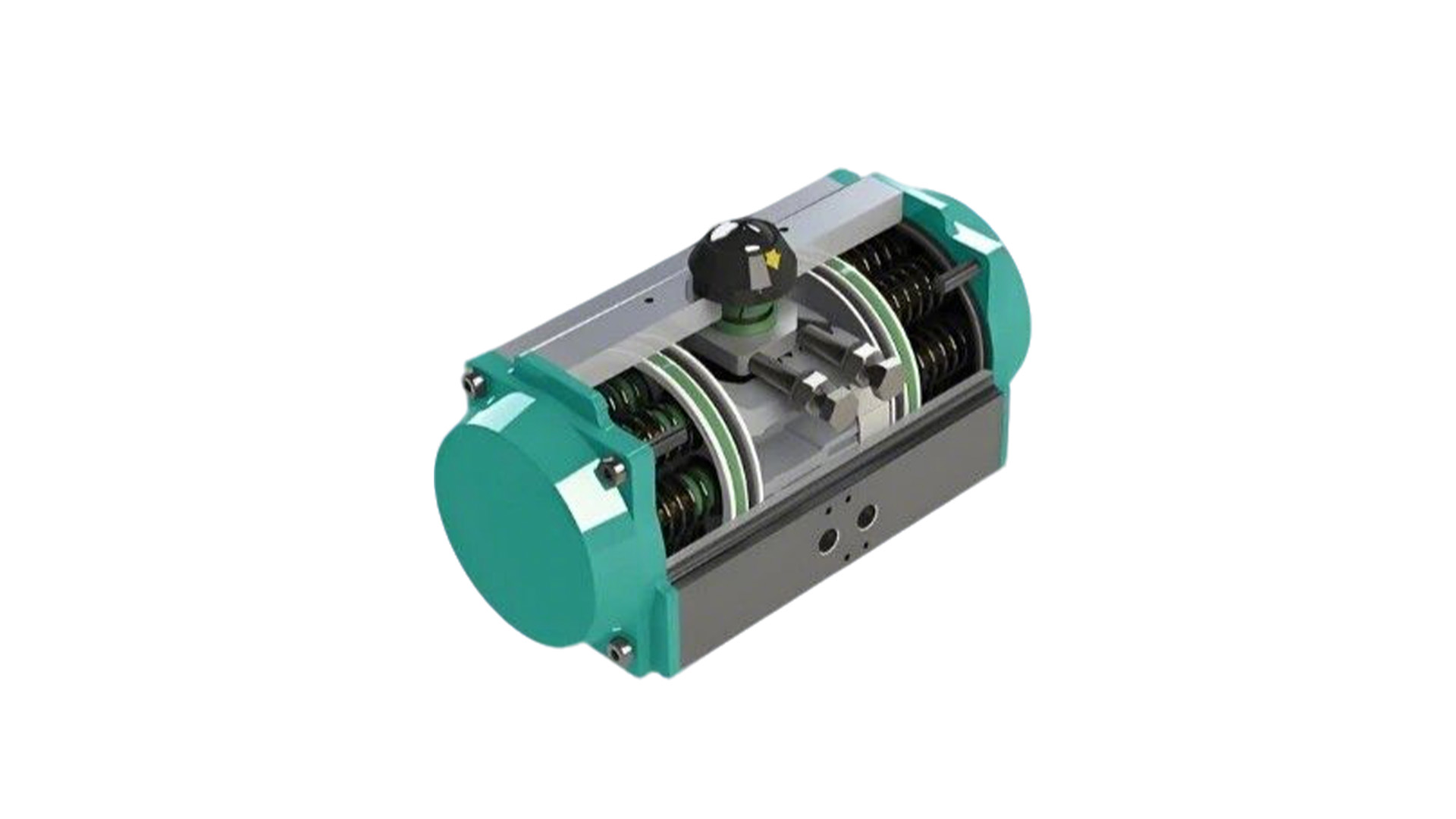
In industrial automation control systems, actuators are an essential component for driving valves. Based on their working principles and structures, actuators are generally divided into two main types: single-acting actuators and double-acting actuators. Each type has its own advantages in different application scenarios, and selecting the appropriate actuator is crucial for the safety, reliability, and efficiency of the system.
1. Single-Acting Actuators
Single-acting actuators typically consist of a pneumatic cylinder and a spring. The spring is used to return the actuator to its original position when the air supply fails or pressure is lost, allowing the valve to return to its default position.
Advantages
Simple structure:
Single-acting actuators have a relatively simple design with fewer components, resulting in lower manufacturing costs.
High safety performance:
When the air supply becomes abnormal, the spring can automatically return the valve to a safe position, making it suitable for systems with high safety requirements.
Energy saving:
The reset process relies on spring force rather than additional compressed air, which helps reduce energy consumption.
Disadvantages
Limited output force:
The spring force limits the actuator’s output capability, which may be insufficient for large-diameter valves or high-load applications.
Slower response speed:
Spring return is slower, especially for large valves or heavy loads, which can affect valve opening and closing speed.
Spring lifespan issues:
Over long periods of use, springs may experience fatigue or deformation and require regular maintenance or replacement.
2. Double-Acting Actuators
Double-acting actuators use compressed air to push the piston in both directions, enabling the valve to open and close without relying on a spring for reset.
Advantages
High output force:
They can provide greater driving force, making them suitable for large-diameter valves or high-resistance operating conditions.
Fast response speed:
With pneumatic power driving the piston in both directions, the valve can open and close quickly without spring return delay.
High reliability:
Since there is no spring component that easily wears out, the likelihood of failure is reduced, improving stability and lowering maintenance costs.
Disadvantages
More complex structure:
Dual air paths are required to control piston movement, often involving solenoid valves and other control components, which increases manufacturing and installation costs.
Relatively lower safety:
In the event of air supply failure, the actuator cannot automatically return to a safe position. Additional safety devices are often required, increasing system complexity.
Higher energy consumption:
Compressed air is required for both opening and closing actions, resulting in higher energy consumption compared with single-acting actuators.
Conclusion
Both single-acting and double-acting actuators have their own advantages and disadvantages. When selecting an actuator, factors such as valve size, load conditions, response speed requirements, and system safety needs should be carefully considered to ensure stable and safe operation of the automation control system.